Repair language
What to actually say after you yelled, withdrew, or said something you wish you hadn't.
Every parent ruptures. The good ones repair. Repair is not weakness, and it is not a do-over. It is the most powerful teaching moment in a child's emotional life: it shows them that big feelings don't break a relationship, and that adults take responsibility for their part.
What follows is the language Mirra has refined with families over fifteen years of clinical work. Use whichever piece fits your moment. Skip whatever doesn't.
“Children don't need parents who never lose it. They need parents who come back.”
Mirra Wicker
The shape of a repair
Most repairs that land have four moves, in this order.
- Name what you did Plainly. No hedging, no “but you were…”.
- Take responsibility for it Without making it about you.
- Say what you wish you'd done instead.
- Reconnect A look, a touch, a shared task, a small joke if it fits. Connection closes the loop the way a hug closes a long phone call.
When you yelled
Try these phrases
- “I yelled. That wasn't okay, even though I was frustrated.”
- “I'm sorry. You didn't deserve that voice.”
- “What I wish I'd said is, "This is hard for me right now, give me a minute."”
- “I love you, and I'm still here.”
When you went cold or walked away
Try these phrases
- “I got quiet earlier because I was overwhelmed, not because of you.”
- “Pulling away made you feel alone, and that wasn't fair.”
- “I'm back now. I want to know how you're doing.”
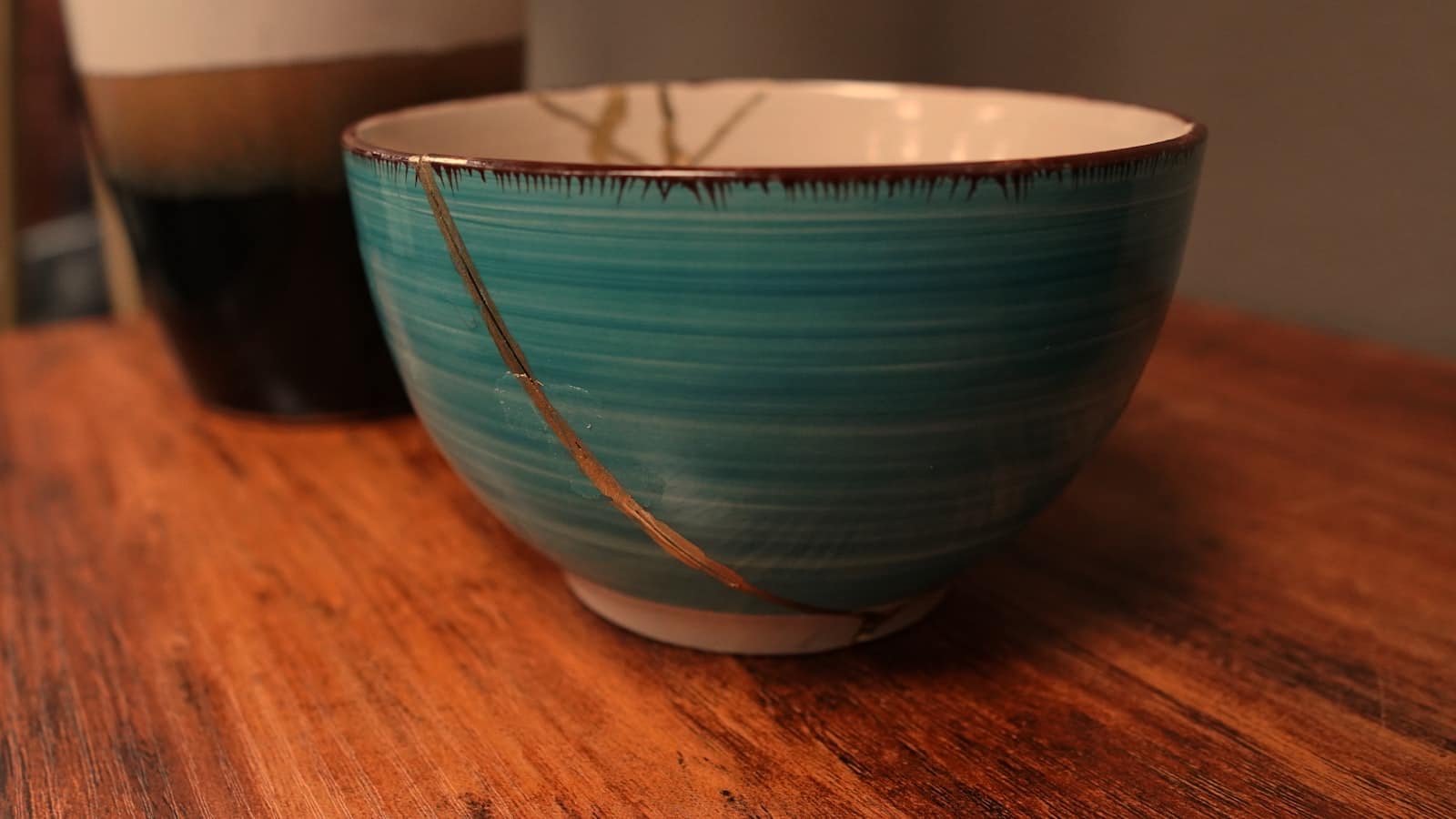
 In kintsugi, the repair is gold. The break becomes the most beautiful part of the bowl.
When you said something you regret
Try these phrases
- “What I said earlier — "you're being so dramatic" — that wasn't true.”
- “Your feelings made sense. I didn't have the patience to meet them.”
- “I'm working on this. I'm sorry that working on it sometimes lands on you.”
 Repair warms what felt cold between you — a field is greenest after it has weathered a storm.
What not to say in a repair
- Instead of: I'm sorry I yelled, but you weren't listening. Try: I yelled. That wasn't okay. You deserved a calmer voice.
- Instead of: I'm sorry you felt that way. Try: I'm sorry I made you feel that way. It was the way I spoke.
- Instead of: Can we just move on? Try: I want to come back to what happened, when you're ready.
- Instead of: Mommy/Daddy was just stressed. Try: I was stressed, and that's mine to manage. It wasn't fair to bring it onto you.
When to do it
Sooner than you think, but not in the heat. The window is usually within an hour or two — long enough that both nervous systems have settled, short enough that the rupture is still alive in their body.
If you're a day late, repair anyway. "I've been thinking about how I spoke to you yesterday" is a sentence children hold for life. It is never too late.